Updated June 2026 — refreshed with SAP Sapphire 2026 developments, the new agentic-SAP threat surface, 2026 regulatory deadlines, and dollar-quantified SoD risk. Originally published March 2026.
As we move through 2026, the cyber security landscape for SAP systems is undergoing a structural shift — not just more attacks, but a fundamentally new attack surface. SAP remains the system of record for finance, supply chain, and HR at most large enterprises, which makes it the highest-value target in the building. This article covers the critical SAP security concerns in 2026 and the strategies organizations are adopting to stay ahead — including the one most security teams are not yet ready for: autonomous AI agents acting inside SAP.
What Changed in 2026: The Agentic SAP Threat Surface
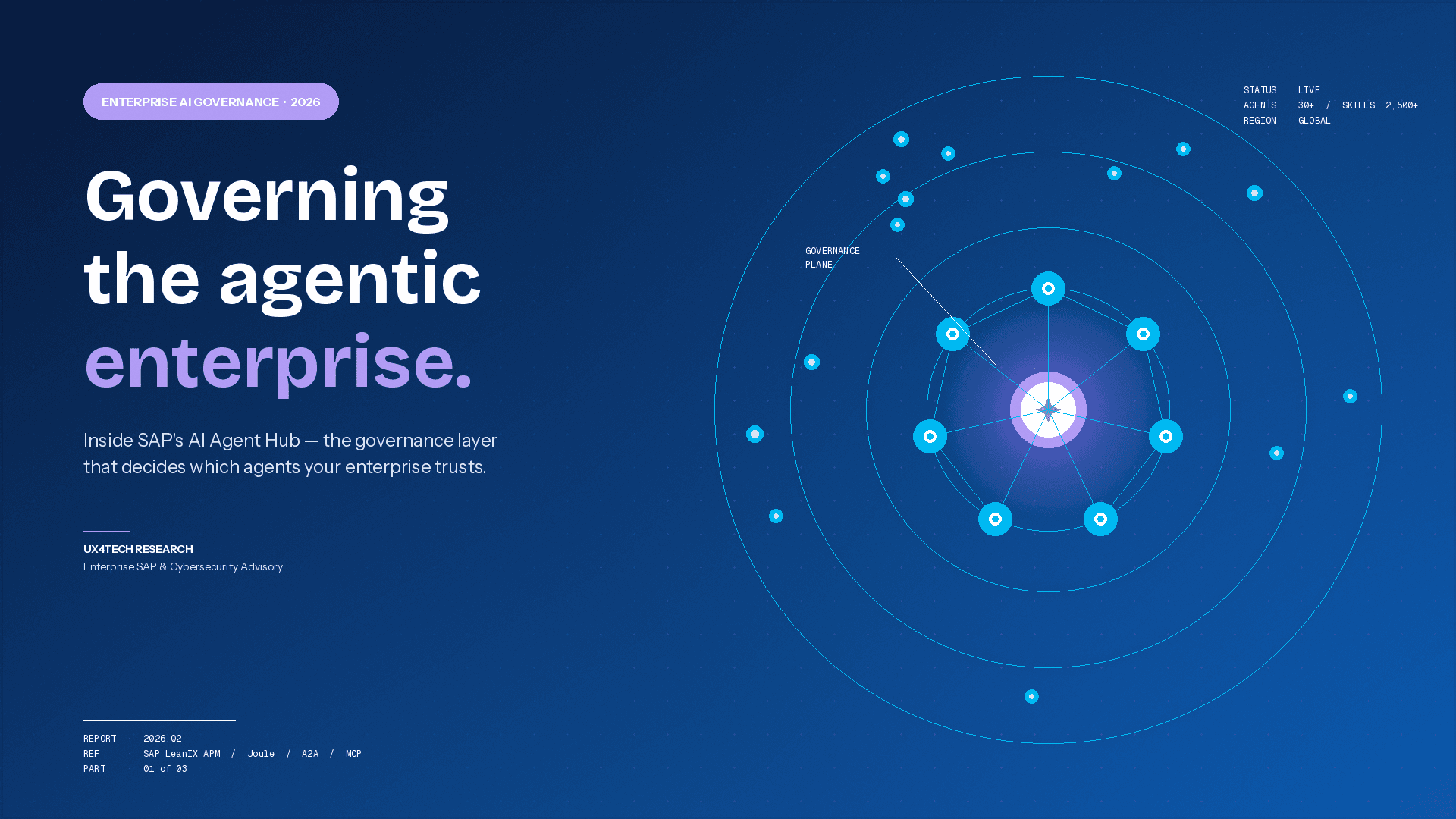
At SAP Sapphire 2026, SAP positioned Joule and the "Autonomous Enterprise" at the center of its roadmap — with the stated ambition of a large share of routine transactions being executed through AI agents rather than humans. That changes the security model. Every agent that can post a journal entry, change a vendor master record, or approve a purchase order is a new non-human identity (NHI) with real authority — and NHIs now outnumber human users in many SAP landscapes.
The hard questions for 2026 are no longer only "who has access?" but:
- Which agents can execute toxic combinations of actions (e.g. create a vendor and pay that vendor) — the same segregation-of-duties (SoD) risk we have always governed for humans, now at machine speed and volume?
- Who governs the agents? NHIs are frequently provisioned with broad technical roles, rarely reviewed, and almost never offboarded.
- Can you prove what an agent actually did — not just what it was allowed to do — to an auditor?
The SAP + Microsoft Copilot Integration Risk
As enterprises wire SAP data into Microsoft 365 and Copilot so business users can ask questions in Teams, the convenience creates a new exposure: sensitive SAP data flowing into a conversational layer where traditional SAP authorizations may not fully follow it. Securing this bridge — identity propagation, data-scope enforcement, and audit logging across both platforms — is one of the defining SAP security projects of 2026. (See our deep dive on securing the SAP–Copilot integration.)
From "Can-Do" to "Did-Do": Quantifying SoD Risk in Dollars
Traditional access analysis answers a "can-do" question: could this user (or agent) commit fraud based on their access? That produces long lists of theoretical risk that boards struggle to act on. The 2026 expectation — driven by audit committees and CFOs — is "did-do" analysis: who actually executed both sides of a conflicting transaction pair, and how many dollars are really exposed. Correlating SAP business documents (GL, AP, procurement) against the SoD ruleset turns a 9,000-row "risk list" into a defensible, dollar-quantified exposure number leadership can prioritize. This is the shift from compliance theater to measured risk.
2026 Regulatory Pressure: NIS2, DORA, and SOX-for-AI
Regulation is forcing the timeline. EU NIS2 and DORA raise the bar on operational resilience and supervised accountability for critical systems — and SAP is squarely in scope for most in-scope organizations. In parallel, auditors are extending SOX-style control expectations to AI that touches financial processes, meaning the agents posting to your ledger now need the same control evidence as a human clerk. The organizations that treat 2026 as a deadline year rather than a planning year are the ones that will pass their audits cleanly.
Key Cyber Security Concerns (2026)
- Ransomware against ERP: attackers increasingly target the systems whose downtime is most expensive — and nothing is more expensive to halt than SAP.
- Data breaches: sensitive financial and personal data in SAP carries direct regulatory penalty exposure under 2026 frameworks.
- Insider and agent threats: privileged humans and over-permissioned AI agents both sit inside the trust boundary.
- Unpatched SAP Security Notes: SAP's monthly Security Notes remain a primary exploited vector; patch latency is still where most real incidents originate.
Strategies for Securing SAP Systems in 2026
Govern Agents Like You Govern Users
Extend role-based access control, SoD rules, and joiner-mover-leaver lifecycle management to non-human identities. Every Joule/agent identity needs an owner, a review cycle, and an offboarding path.
Continuous Controls Monitoring (not annual sampling)
Move from periodic audits to continuous, 100%-transaction monitoring that flags materialized violations with their dollar value — so remediation is prioritized by real exposure, not list length.
Least Privilege + Regular Security Notes Patching
Enforce minimum necessary access and keep pace with SAP's monthly Security Notes; patch latency is the most common root cause of real-world SAP incidents.
Advanced Threat Detection & SIEM Integration
Stream SAP security telemetry into your SIEM (e.g. Microsoft Sentinel) for early detection of anomalous human and agent activity.
Encryption, Backups, and Tested Recovery
Encrypt data at rest and in transit, and — critically — test your restore path so a ransomware event is a recovery exercise, not a crisis.
Train for the Human Layer
Employees remain the first line of defense against phishing and social engineering; pair training with technical controls.
Looking Ahead
2026 is the year SAP security stops being only an IT-access problem and becomes a governance problem spanning humans, AI agents, and the platforms SAP connects to. Organizations that install governance as a live, continuous layer — over both people and agents — will protect against financial loss and pass the new wave of audits. Those that wait will discover, the hard way, that an autonomous enterprise without autonomous governance is just a faster path to risk.
Securing SAP in 2026? UX4Tech helps enterprises govern both human and AI-agent access in SAP — SoD analysis, dollar-quantified risk, and continuous controls monitoring inside your Microsoft estate. Talk to our SAP security practice →